


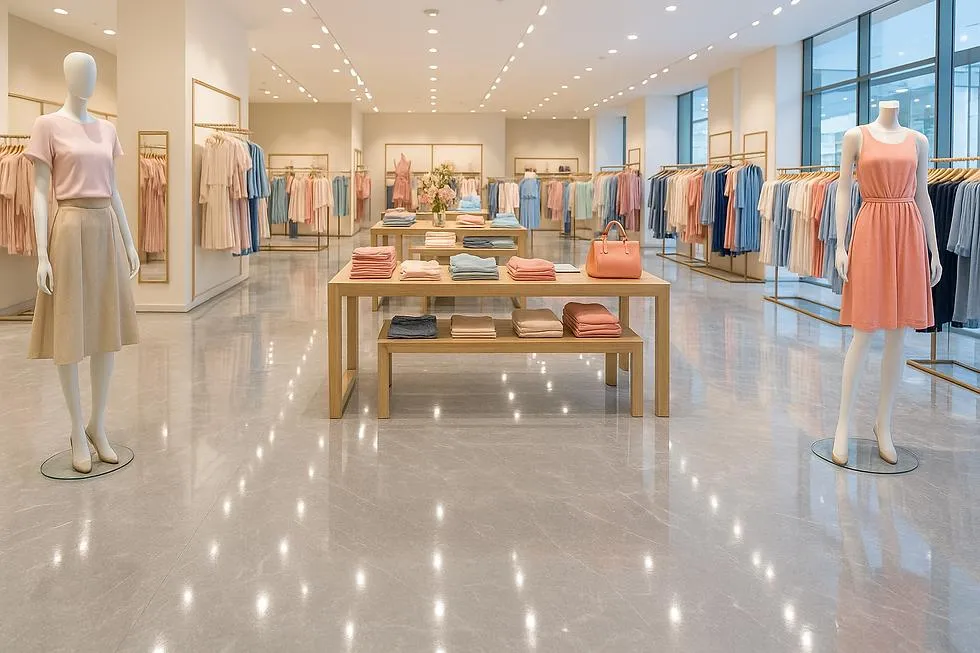
A customer entering a boutique notices the merchandise first, but the space surrounding it shapes how the visit feels. Lighting, displays, walking routes, and even the floor contribute to that impression. Choosing commercial floor coatings is therefore not simply a maintenance decision for retailers. The surface must withstand daily footsteps, rolling carts, spills, and cleaning without distracting from the products on display. For stores across the San Francisco Bay Area, a thoughtful flooring plan can connect visual identity with the practical demands of business.
Start With The Customer Journey
Observe how shoppers actually move through the store before selecting a finish. Most people follow predictable routes between the entrance, featured displays, checkout counter, and fitting rooms. Those paths receive more wear than quiet corners, particularly when customers arrive with wet shoes or shopping bags. Floor design can subtly define areas through color or texture, but abrupt changes should not create tripping hazards. A useful plan begins with a sketch of traffic patterns, including delivery routes that customers may never see during opening hours.
Let Lighting Guide Finish Choices
A glossy surface can reflect overhead lighting and create a bright, polished atmosphere, particularly in a showroom with carefully arranged displays. Yet reflections may also produce glare or reveal footprints and scuffs more readily. Matte and satin finishes offer alternatives where softer visual effects are preferred. Test physical samples under the store’s actual lighting rather than relying only on online photographs. Natural daylight changes throughout the day, and a floor that looks subtle in the morning may appear dramatically different beneath evening fixtures.
Match Materials To Daily Exposure
Retail spaces encounter a surprisingly varied mix of stress. Shoe grit abrades busy entrances, display stands create concentrated loads, and occasional spills test the surface’s resistance to stains. A supplier offering concrete coatings should assess the slab’s condition alongside these daily demands. Epoxy and polyaspartic systems are among the options used for commercial spaces, but specifications should address expected traffic, cleaning chemicals, and traction. A decorative finish alone cannot resolve moisture problems or compensate for poor preparation beneath the coating.
Design Beyond The Sales Floor
The public-facing area may receive most of the design attention, but back rooms matter just as much operationally. Employees move boxes, maneuver carts, and organize deliveries on surfaces that often experience tougher wear than the showroom. A consistent finish can simplify cleaning across connected areas, while targeted textures may be appropriate where spills occur. Discuss the transition between spaces with the installer, especially at doorways and service corridors. The result should support staff workflows without making customer areas feel like storage facilities.
Keep Cleaning Realistic For Staff
A beautiful floor becomes frustrating if ordinary cleaning takes too much time. Ask how the finish responds to tracked-in dirt, beverage spills, and repeated mopping. Seamless surfaces can reduce joints where grime collects, although maintenance still depends on the coating and its texture. Retail teams should receive straightforward instructions about suitable detergents and equipment. Avoid choosing a heavily textured finish purely for its appearance if it will make routine cleaning unnecessarily difficult. Practical care requirements deserve discussion before a final color is approved.
Schedule Work Around Selling Hours
Floor replacement can interrupt sales, deliveries, or access to stock, so installation planning should start early. Some businesses can close briefly, while others may divide work into sections or use quieter trading periods. Surface grinding, repairs, coating application, and curing each require adequate time. A floor that looks dry may not yet be ready for rolling displays or customer traffic. Contractors and managers should agree on reopening conditions in advance, including ventilation and how merchandise will be protected while the work takes place.
Judge Success After The Opening
The true test of a retail floor begins after normal operations resume. Watch how the surface performs near entrances, checkout lines, and frequently moved displays. Note whether cleaning remains manageable and whether customers can navigate the space comfortably. Small maintenance issues are easier to address when noticed early. Retailers should retain product guidance and document any coating repairs for future reference. These observations also reveal whether the original design choices remain useful when seasonal displays, promotional events, or store layouts change.
Conclusion
Retail flooring succeeds when it supports the shopping experience without drawing constant attention to itself. For business owners, that means making informed choices about appearance, safety, access, and ongoing upkeep rather than selecting a finish from a single photograph. Commercial flooring systems can be explored at rhynopoxy.com, where Bay Area retailers can review options relevant to their premises. Before requesting a proposal, walk the store at its busiest hour and record what the floor must handle. That observation can shape a more useful specification.